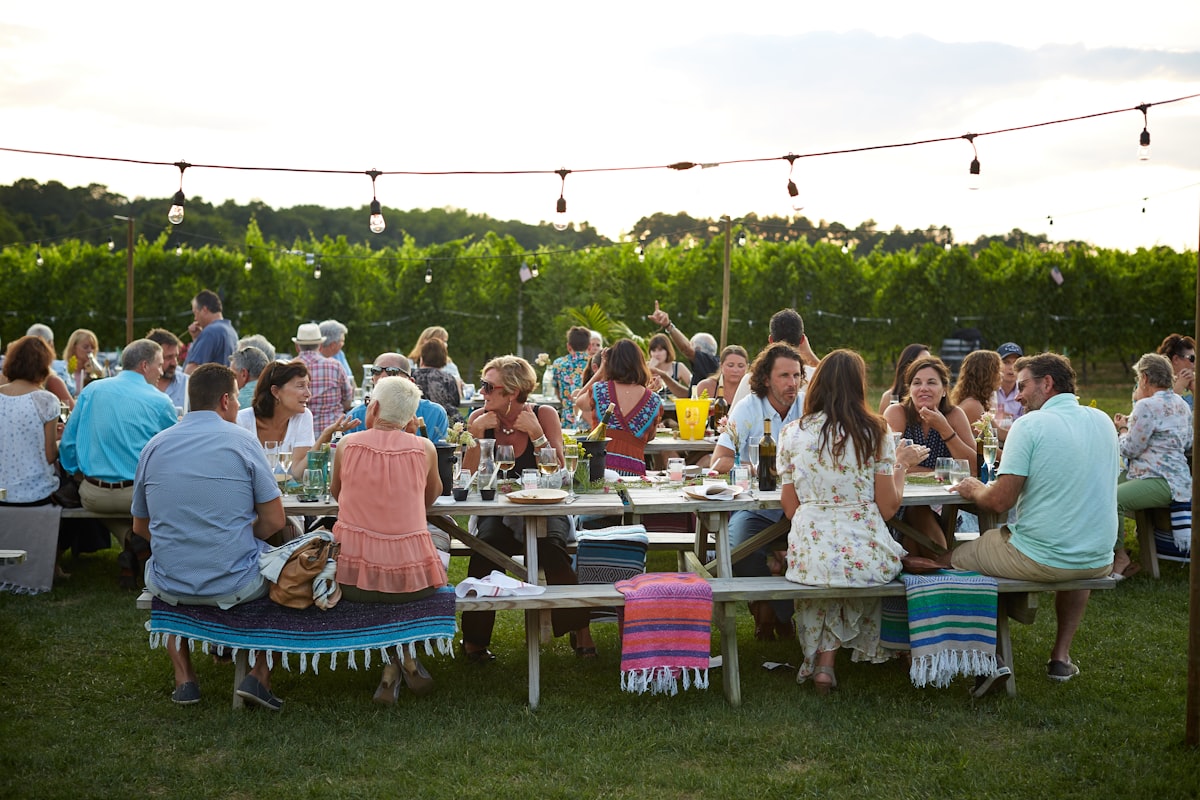
Winery events become profit centers when they are designed around member conversion and relationship deepening rather than around hospitality showcase — the shift requires treating every event as a structured sales journey with a defined next step, not a goodwill gesture. Events that include a natural wine club pitch moment, a mechanism for capturing non-member contact information, and a post-event follow-up sequence consistently generate positive ROI; those designed purely around experience without a conversion architecture rarely cover their own costs when staff and resource expenses are counted. The most profitable winery events are also the most exclusive — small capacity, member-first invitations, and a waitlist that drives non-member signup.
Most premium wineries view events as necessary marketing expenses. Write them off. Hope they generate some buzz. Cross fingers for a few new club members.
What if I told you the highest-performing wineries see events as profit centers that simultaneously build relationships?
After analyzing winery events’ financial performance, I’ve identified a strategic design framework that transforms traditional thinking about event economics.
The Event Economics Reality Check
Here’s what conventional winery events typically look like financially:
- Direct costs: a significant fixed outlay per event.
- Staff time allocation: substantial.
- Revenue generation: modest relative to cost.
- Net result: Break-even or modest loss.
The justification? “Brand building” and “customer engagement.”
But what if events could generate meaningfully more revenue while creating stronger customer relationships than traditional approaches?
The Strategic Event Design Framework
The most profitable winery events share five specific characteristics that most operations overlook:
- Tiered Access Architecture
Instead of single-price admission, create multiple participation levels:- Tier 1 ($85): Standard tasting, light appetizers, 2-hour access.
- Tier 2 ($165): Enhanced tasting, full meal, 4-hour access, take-home bottle.
- Tier 3 ($285): VIP experience, private winemaker session, exclusive wines, gift package.
Reasoning: This mirrors successful concert and conference pricing models. People self-select based on value perception and budget, maximizing revenue without excluding anyone. - Extended Timeframe Strategy
Stretch events across multiple days rather than concentrating everything in a single session:- Friday: Industry professionals and serious collectors only.
- Saturday: General public, multiple session times.
- Sunday: Members-only exclusive access.
Reasoning: Most wineries think bigger events mean better economics. Multiple smaller sessions with different audiences generate higher per-capita spending and better experiences. - Scarcity and Transparency Mechanics
Limited attendance with visible remaining spots creates natural urgency:- Cap total attendance at venue capacity minus 20%.
- Display remaining spots on registration pages.
- Send “limited availability” updates to email list.
Reasoning: Basic behavioral economics. Scarcity increases perceived value, but transparency maintains trust. No manipulation, just honest capacity management. - Strategic Bundle Integration
Create event-exclusive product packages unavailable outside the event window:- Limited-release wines only available to attendees.
- Specially priced mixed cases.
- Future release pre-orders with event pricing.
Reasoning: Events become product launches, not just tastings. Attendees get genuine exclusivity, wineries get higher-margin sales. - Digital Twin Components
Parallel virtual experiences for those unable to attend physically:- Live-streamed winemaker presentations.
- Virtual tasting kits shipped to remote participants.
- Interactive Q&A sessions.
Reasoning: Physical events have natural capacity limits. Digital components eliminate geographic constraints while serving customers who prefer remote participation.
Event Financial Modeling Template
Here’s how to evaluate event profitability using this framework.
Revenue Streams
- Tiered admission fees.
- Product sales.
- Virtual participation.
- Total Potential: the combined revenue across all three streams.
Cost Structure
- Venue and logistics.
- Staff time (at opportunity cost).
- Marketing and systems.
- Total Investment: the sum of these line items.
Net Profit Potential: a meaningful profit per event once revenue exceeds total investment.
Implementation Roadmap
Phase 1: Event Design (Weeks 1-2)
- Define tiered access structure based on your audience.
- Plan extended timeframe logistics.
- Design exclusive product bundles.
- Develop scarcity messaging strategy.
Phase 2: Technical Setup (Weeks 3-4)
- Implement registration system with tier options.
- Set up inventory tracking for limited availability.
- Create virtual participation infrastructure.
- Design automated marketing sequences.
Phase 3: Marketing Launch (Weeks 5-6)
- Announce event with clear tier differentiation.
- Deploy scarcity-based communication strategy.
- Activate virtual participation marketing.
- Monitor registration patterns and adjust messaging.
Phase 4: Execution and Analysis (Event week + 2 weeks post)
- Execute multi-day event schedule.
- Track financial and engagement metrics.
- Gather participant feedback.
- Analyze ROI and plan improvements.
The WISE System Event Integration
Events designed using The WISE System principles generate both immediate revenue and long-term customer intelligence:
- Signals: Participant behavior, spending patterns, engagement preferences.
- Education: Understanding which event elements drive highest satisfaction and spending.
- Insights: Predicting optimal event frequency, format, and pricing for your audience.
- Wisdom: Creating event strategies that compound customer lifetime value.
Ready to transform your event economics? Here’s how to start
- Audit your last three events using the financial framework above.
- Identify which design principles would have the highest impact for your winery.
- Plan your next event using the strategic framework.
- Measure everything to build your event optimization database.
For marketing effectiveness across all winery archetypes, viewing events through this strategic lens turns traditional expenses into powerful growth engines.
How have you evolved your event strategy beyond traditional approaches?
