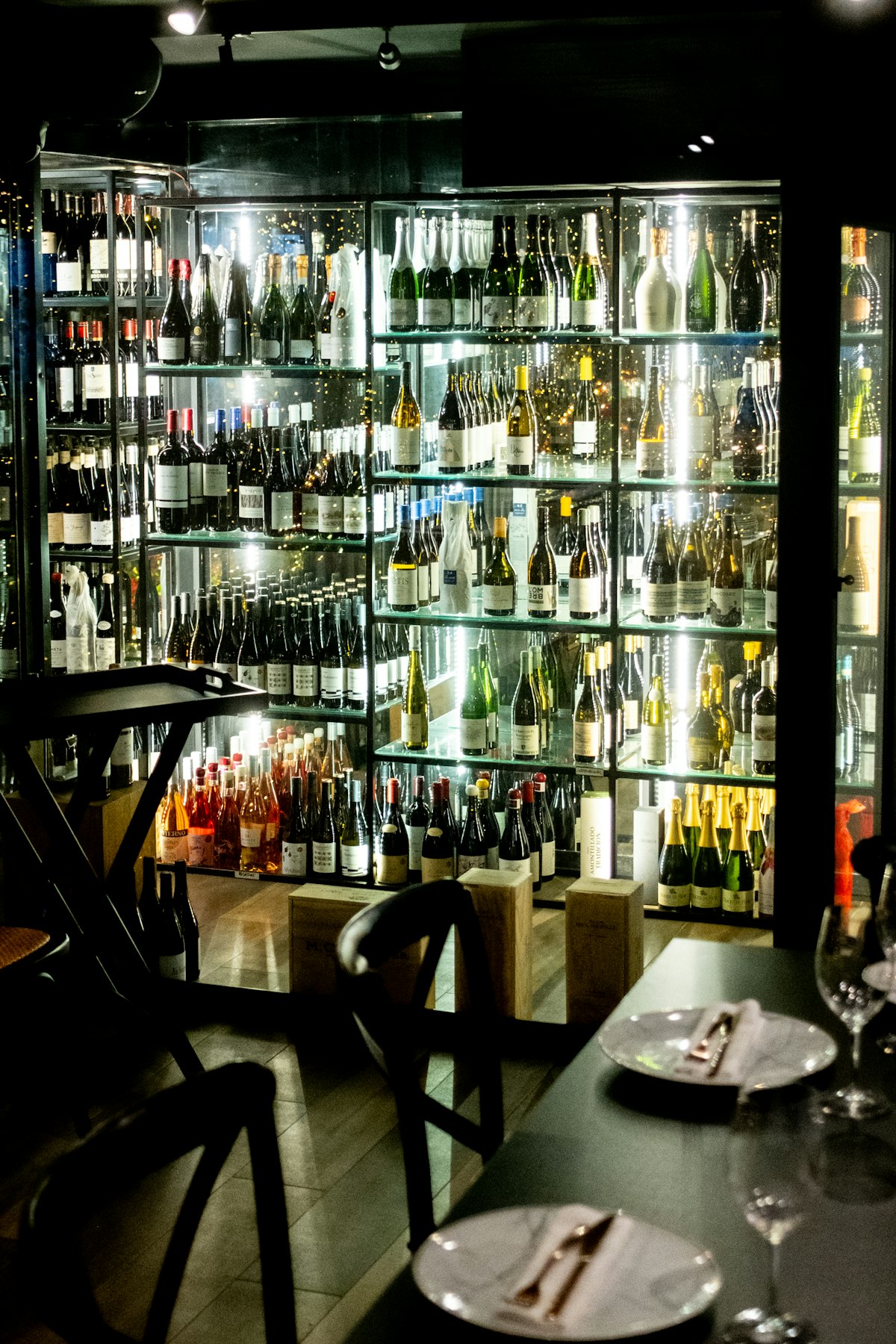
A tasting room that loses money on a per-visit basis is operating correctly if it efficiently converts visitors into wine club members whose lifetime value far exceeds the tasting room subsidy cost. The math is straightforward: if a tasting experience costs $40 to deliver (staff, product poured, overhead allocation) and generates a $12 tasting fee, but converts 30% of visitors to club members worth $800+ in lifetime value, the $28 per-visit loss is one of the best marketing investments a winery can make. Measuring tasting room profitability in isolation — rather than as a member acquisition cost — leads to counterproductive decisions, such as raising tasting fees or cutting the quality of the experience to hit short-term P&L targets.
Last quarter, I sat in on a heated discussion between a winery owner and their tasting room manager. The manager defended low daily sales numbers while the owner questioned their visitor conversion strategy.
Both were wrong. They were optimizing for the wrong metric entirely.
After analyzing tasting rooms’ visitor acquisition data, many boutique wineries fundamentally misunderstand their tasting room economics.
The Metrics Inversion Problem
Here’s what I found. The standard approach focuses on:
- Daily revenue per visitor.
- Average transaction size.
- Hourly sales targets.
- Monthly tasting room profit.
Meanwhile, the highest-performing operations I’ve studied track completely different variables:
- Actual visitor acquisition cost (marketing + operational costs divided by visitors).
- Conversion to high-value relationships (club membership, mailing list engagement).
- Customer acquisition cost (CAC) optimization.
- Lifetime value per acquired customer.
The difference? A substantial sum annually for a typical boutique winery with steady monthly visitor traffic.
The Real Numbers: Lifetime Value vs. Transaction Value
Each tasting room visitor for boutique wineries represents potential multi-year revenue worth thousands of dollars in lifetime value.
Yet most operations treat visitors as one-off transaction opportunities rather than long-term relationship investments.
Consider Maria’s winery (pseudonym), a mid-sized boutique producer.
Before CAC Optimization:
- High monthly visitor volume.
- A modest wine club conversion rate.
- A typical tasting room transaction size.
- Solid monthly tasting room revenue.
After CAC Optimization:
- Fewer monthly visitors (intentionally reduced through qualification).
- A substantially higher wine club conversion rate.
- A larger average transaction (higher quality interactions).
- Higher monthly revenue plus significant annual club LTV.
The shift from volume to value drove a dramatic improvement in customer lifetime value.
The Four-Pillar CAC Framework
Based on successful implementations, here’s how acquisition-focused wineries restructure their tasting room economics.
Pillar 1: True Cost Calculation
Traditional Approach: Revenue divided by visitors equals daily performance.
CAC Approach: (Marketing + labor + facilities + inventory) divided by qualified leads equals acquisition efficiency.
Implementation Example:
- Monthly costs: the fully-loaded total across marketing, labor, facilities, and inventory.
- Qualified leads: the count of visitors who engage beyond basic tasting.
- Actual acquisition cost: monthly costs divided by qualified leads.
Pillar 2: Qualification-Based Pricing
Traditional Approach: Tasting fees maximize short-term revenue.
CAC Approach: Tasting fees filter for serious prospects.
Case Study: A winery raised its tasting fee meaningfully and saw:
- Fewer total visitors.
- More club conversions.
- Higher visitor engagement scores.
- A larger average order value.
Higher fees attract visitors with genuine purchase intent while deterring casual browsers.
Pillar 3: Conversion Tracking Systems
Traditional Approach: Track immediate sales.
CAC Approach: Track relationship development stages.
Implementation Framework:
- Stage 1: Visitor engagement (time spent, questions asked).
- Stage 2: Contact capture (email, phone, address).
- Stage 3: Follow-up response (opens, clicks, replies).
- Stage 4: First purchase (club signup, case purchase).
- Stage 5: Advocacy development (referrals, reviews, events).
Pillar 4: Lifetime Value Optimization
Traditional Approach: Maximize immediate transaction.
CAC Approach: Optimize for long-term relationship value.
The WISE Service Integration
This framework aligns perfectly with The WISE Service methodology:
- Signals: Visitor behavior data, engagement metrics.
- Education: Understanding visitor motivations and preferences.
- Insights: Identifying high-value relationship indicators.
- Wisdom: Strategic decisions that prioritize lifetime value over immediate revenue.
Financial Modeling: The Real Impact
Here is the financial modeling framework that illustrates the potential impact across different production scales.
Winery A (smaller boutique producer)
- Pre-optimization: tasting room revenue only.
- Post-optimization: meaningfully higher total revenue (room + acquired customer LTV).
- Improvement: a solid increase in total value generated.
Winery B (smaller boutique producer)
- Pre-optimization: tasting room revenue only.
- Post-optimization: substantially higher total revenue (room + acquired customer LTV).
- Improvement: a large increase in total value generated.
Winery C (larger boutique producer)
- Pre-optimization: tasting room revenue only.
- Post-optimization: roughly double the total revenue (room + acquired customer LTV).
- Improvement: a major increase in total value generated.
Implementation Timeline: 90-Day Transformation
Days 1-30: Baseline Assessment
- Calculate the current actual acquisition costs.
- Measure existing conversion rates across relationship stages.
- Establish lifetime value benchmarks for current customers.
- Identify operational inefficiencies in visitor experience.
Days 31-60: System Restructuring
- Implement a qualification-based pricing strategy.
- Deploy conversion tracking systems.
- Train staff on relationship-focused interactions.
- Begin testing higher-value visitor experiences.
Days 61-90: Optimization and Scaling
- Analyze early results and adjust pricing and experience elements.
- Refine staff training based on conversion data.
- Implement automated follow-up systems for relationship development.
- Establish ongoing measurement and improvement processes.
Why This Approach Works: The Psychology Behind CAC Optimization
The reason this transformation works isn’t just mathematical; it’s psychological.
When you treat your tasting room as a customer acquisition channel rather than a revenue center, several behavioral shifts occur:
- Staff Focus Changes: Team members prioritize relationship building over transaction closing.
- Visitor Quality Improves: Higher qualification standards attract more serious prospects.
- Experience Depth Increases: Longer, more meaningful interactions create stronger connections.
- Follow-up Intensifies: Acquisition focus demands systematic relationship development.
Your Next Steps: Implementing CAC-Focused Economics
Ready to transform your tasting room from a transactional experience into a high-performance customer generation system?
- Step 1: Calculate your current actual visitor acquisition cost.
- Step 2: Measure your conversion rates across all relationship stages.
- Step 3: Determine the lifetime value of your best customers.
- Step 4: Design a qualification-based experience that attracts high-value prospects.
Why I’m sharing this methodology: Too many passionate winery owners are working harder instead of smarter. The financial modeling and conversion optimization strategies I’ve outlined represent years of testing across different winery archetypes.
The data consistently shows that acquisition-focused operations outperform transaction-focused ones by margins that transform business viability.
Learn more about visitor acquisition optimization and how The WISE Service can help optimize your strategy.
