Heritage wineries can lift site-to-purchase conversion 40-65% by separating storytelling content from the commerce path — keeping the founder’s brand voice exactly where it belongs on /about and /winemaker pages, while rebuilding product detail pages for buy intent with vintage notes, allocation status, social proof, and a dominant buy button. The failure mode is treating heritage content and conversion content as the same job. They are not. Product pages sitting in the same template tree as storytelling pages and inheriting the same content philosophy typically convert at 1.1-1.8%, while purpose-built premium wine PDPs land at 2.4-3.6%.
There is a specific failure mode common to heritage wineries that have invested in their brand storytelling. The About page is excellent. The vineyard page reads like a love letter. The winemaker bio runs 1,800 words and includes a quote from a 1972 harvest journal. All of it is good. None of it is converting buyers.
The product page sits in the same template tree as the storytelling pages and inherits the same content philosophy. Founder paragraphs migrate into the PDP. The vintage notes get pushed below the fold. The buy button competes with three blocks of family history. Conversion rate on those PDPs typically lands at 1.1-1.8% for heritage wineries; the category benchmark for purpose-built premium wine PDPs is 2.4-3.6%.
The Storytelling-to-Commerce Bridge
Layer 1: Heritage as the trust layer
The /about page, the /winemaker page, the /vineyards page, the /history page, the founder video on the homepage — this is the trust layer. Its job is to answer the question: “Why should I take this brand seriously?”
A site visitor under 45 will read this content roughly once. They will form an impression in 60-90 seconds. They will not return to the About page before every purchase. The implication: you do not need the heritage content to load on every page. You do not need it embedded above the fold on the PDP. The trust layer does its job once, and then the commerce layer takes over.
Layer 2: Commerce path built for buy intent
The PDP is the conversion engine. Its job is to answer one question: “Should I buy this bottle right now?” A buy-intent visitor needs:
- Vintage notes (yield, harvest dates, blend composition, oak regimen)
- Tasting notes pitched at the buyer’s likely palate vocabulary
- Food pairing suggestions (concrete, not poetic)
- Allocation status (in stock, allocated only, library release)
- Shipping eligibility by state, with the actual states listed
- Social proof (Wine Spectator score, Vinous, CRM customer reviews)
- Pricing transparency (per bottle, per case, club discount applied)
- A buy button that is visually dominant and not competing with biography blocks
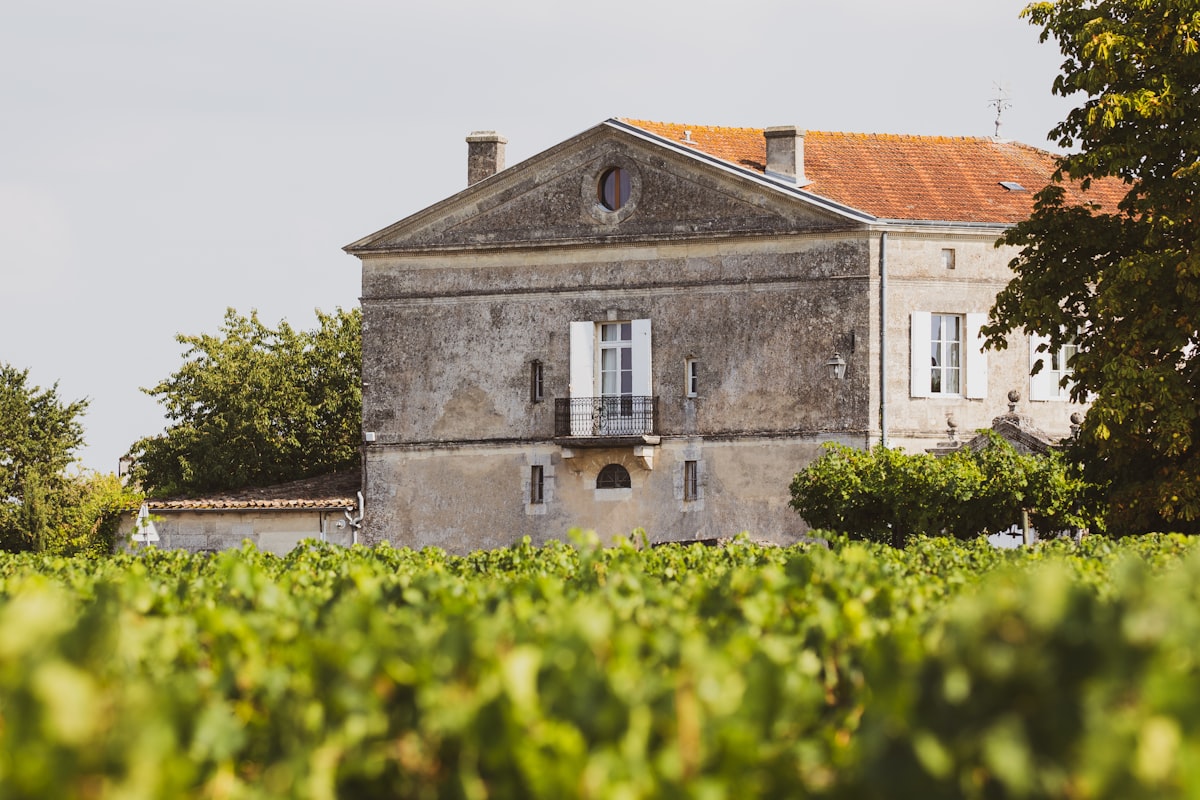
What does not belong on the PDP: founder paragraphs, four-generation history, photos of the estate building, and philosophical statements about terroir. Those belong upstream in the trust layer.
The rebuild typically takes 3-5 days for design and PDP template development, plus a content pass to write conversion-grade vintage notes for each active SKU. Cost falls in the $3,500-6,000 range depending on portfolio size. The conversion delta shows up in CRM reports within 30-60 days.
Layer 3: Behavioral triggers in CRM
The third layer connects trust-layer engagement to commerce-layer conversion via triggered email. Most heritage wineries run Klaviyo on tenure-based or campaign-based logic: monthly newsletter, allocation announcement, shipping reminder. Open rates run 18-24%. Email-attributed DTC revenue typically lands at 22% of total DTC.
The behavioral move: trigger emails based on product-page activity, not on calendar cadence. A subscriber who viewed the reserve cabernet three times in the last 14 days gets a different message than a subscriber who has not opened any email in 60 days. Building three behavioral flows (browse abandonment, repeat-view trigger, dormant re-engagement) typically lifts email-attributed DTC revenue from 22% to 28-34% inside one quarter.
Results You May See
- PDP conversion rate lifted from 1.1-1.8% to 2.4-3.6%
- Email-attributed share of DTC revenue lifts 6-12 points (typically 22% to 28-34%)
- Cart abandonment rate down 18-26%
- Average session-to-purchase time down 35-50%
- Incremental annual DTC revenue of $112,000-186,000 for a winery doing $4M-12M DTC
- Founder’s brand voice and storytelling pages completely unchanged
This Month’s Action
Pull the conversion rate on your top three PDPs. Then load each of those pages in an incognito window as a buyer would see them. Count the number of paragraphs of founder voice or heritage narrative that appear before the buy button. That count is the work. If it exceeds two paragraphs, you have the project.
P.S. The heritage trust layer is your competitive moat. It is the reason the buyer takes you seriously in the first 90 seconds. The mistake is asking it to close as well. The trust layer builds the relationship; the commerce layer monetizes it. Two layers, two jobs, one defensible quarterly-review story.
Learn more about retrieving the buyer conversion rate with a proper heritage-to-commerce bridge.
