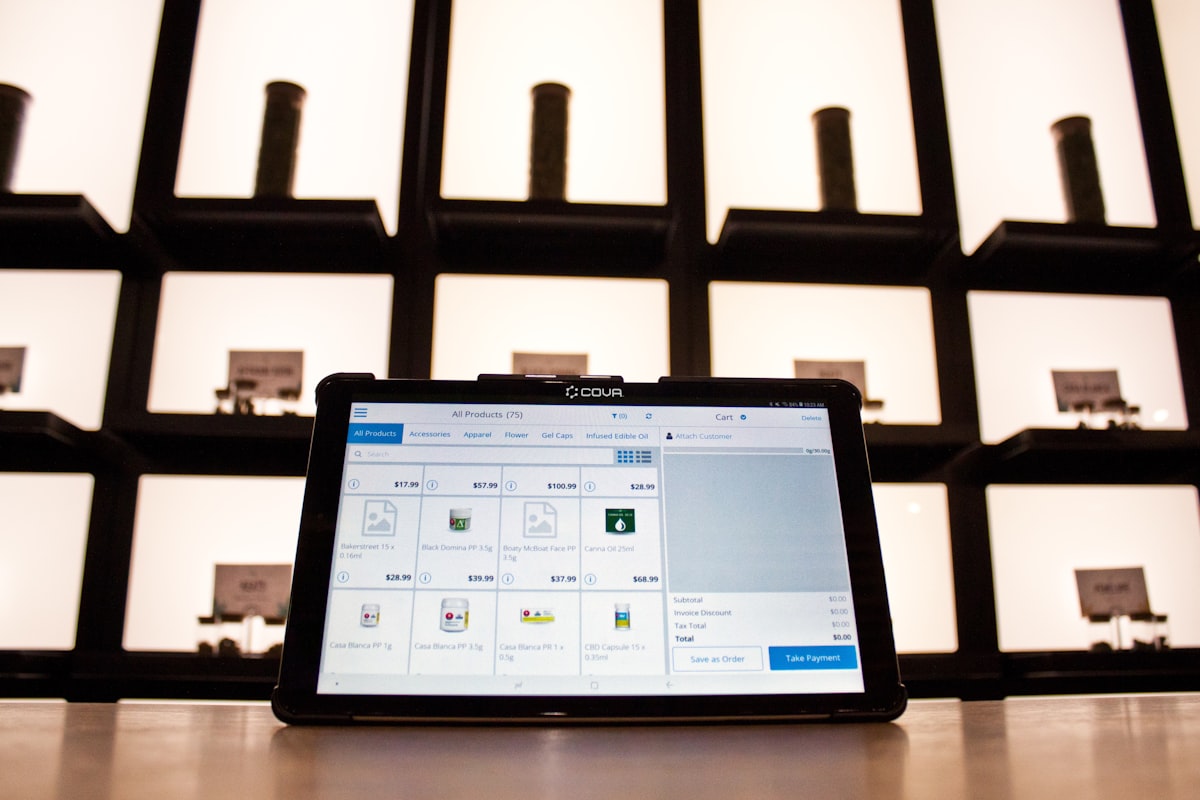
The Pre-Visit Brief closes the gap between buyer data sitting in your DTC commerce platform and the tasting room staff who never see it. By wiring the booking event to a CRM lookup, pre-selecting the flight against the buyer’s purchase signal, and delivering a 30-minute pre-arrival tablet brief, wineries running this framework may see visitor-to-member conversion lift substantially inside one quarter without staff retraining.
Pull your visitor-to-member conversion rate for the last full quarter. For most mid-tier premium California wineries with reservation-based tasting, the number lands in a modest band. Top performers in the same case-volume band run substantially higher. That gap is not a tasting-room talent problem. It is an information problem on the tablet.
The buyer is in your DTC commerce platform with 18 months of purchase data, a club tier, a last-visit date, and a SKU mix that tells you exactly which flight to pour. Your tasting room staff sees a name and a party size on a tablet. Two systems, both yours, neither talking to the other. The visitor walks in cold, gets the standard pour list, and the conversion math runs on charm rather than signal.
The Director’s read on this is operational, not training. You can put your staff through another six hours of upselling instruction, and the conversion rate will barely move. You can build a 30-minute pre-arrival data brief, and the conversion rate will increase markedly within a single quarter, with no staff retraining required.
This matters now because your tasting-room cost per visit is rising. Reservation-based tasting has compressed the daily visit count for most operations to 60-90 covers. Each cover costs considerably more to run than it did three years ago. Revenue per visit must increase, or the tasting room P&L will move in the wrong direction. The Pre-Visit Brief is the highest-leverage operational lift available to a Director who already owns the data.
The Pre-Visit Brief Framework
The framework has three components. Each is a configuration decision in systems your operation already runs. None of them requires new content, new staff, or a brand conversation with the founder.
Component 1: Reservation-to-CRM data pull at booking
When a buyer makes a reservation today, the typical mid-tier flow captures a name, party size, email address, and date. The reservation lives in the reservation system. The buyer’s purchase history lives in the DTC commerce platform. The two never connect, so the staff, upon arrival, has nothing to work with beyond what was captured at booking.
The move is to wire the booking event to a CRM lookup. When a reservation is created, the system queries the DTC commerce platform using the buyer’s email and pulls the last 18 months of activity: SKUs purchased, club tier and tenure, last visit date, average spend per visit, returned-bottle history (if any), and any open allocation status. This data attaches to the reservation record and stays there.
The lookup is a two-way handshake between the reservation system and the DTC commerce platform. For most mid-tier stacks, this is a 1-2 day configuration project against existing API connections. No new platform purchase. No new vendor.
The result: by the time a reservation is confirmed, it carries a buyer profile that your staff can read.
Component 2: Flight pre-selection by buyer signal
Most tasting rooms run a standard pour list. Three or four flights, two whites and two reds, the same offering for the walk-in buyer and the returning club member. This is comfortable because it is operationally simple. It is also the reason a returning buyer has poured the same wine they have already shipped to themselves three times.
With buyer data attached at booking, the flight assignment can pre-select against the buyer’s signal. A two-time Pinot buyer gets a vertical Pinot flight. A buyer whose last three orders were Bordeaux varietals gets the cabernet-led flight. A new visitor with no purchase history gets the discovery flight.
The pre-selection is not displayed to the buyer as personalization. The buyer sees a flight at the table. The staff knows why that flight was selected and can speak to it from the buyer’s purchase history without making the buyer feel surveilled. This is the invisible-personalization principle: the buyer experiences preparedness, not data.
The flight pre-selection lifts in-visit AOV meaningfully in our experience with operations running the brief at scale. The lift comes from two sources: the flight matches the buyer’s known palate, so the upsell to the bottle they wanted is shorter. The staff conversation starts at the buyer’s existing level of engagement rather than at general intake.
Component 3: Tablet brief, 30 minutes pre-arrival
The third component is the staff-facing surface. Thirty minutes before a reservation arrives, the lead host’s tablet receives a brief: the buyer’s name, club tier, last visit date, SKU mix from the past 18 months, total spend, the pre-selected flight, and 2-3 conversation hooks the staff can use (“last purchased the 2021 reserve in February,” “asked about the single vineyard pinot at the November visit,” “mentioned hosting a charity event in the inquiry thread”).
The brief is short. The host reads it in 90 seconds. It does not replace staff judgment; it informs it. A Director who has been on a tasting-room floor knows the difference between a host who walks toward the buyer with a name and a half-remembered detail versus a host who walks toward a stranger with a clipboard. The brief is the difference, mechanized.
For the founder conversation: the brief is not a script. The staff is not following an algorithm. The staff is doing what the best hospitality staff have always done (remembering the buyer, anticipating preferences) at the scale your operation now runs at.
Results You May See
Wineries running the Pre-Visit Brief for a single quarter may see:
- Visitor-to-member conversion lifted substantially above baseline
- In-visit AOV lifted meaningfully (driven by flight-to-purchase match)
- Tablet-staff prep time reduced sharply (the brief replaces 5-7 minutes of pre-shift CRM digging per reservation, work most staff skip anyway)
- Meaningful same-quarter incremental DTC revenue for a 25K-60K case operation with 65-90 daily covers
- Founder’s brand voice and tasting room aesthetic are completely unchanged
The defensible quarterly-review story is two charts: visitor-to-member conversion before and after, and AOV before and after. Both pull from systems your CFO already trusts.
Implementation Steps
- Week 1: Audit the current reservation system for API access to the DTC commerce platform; identify the buyer-data fields you want in the brief
- Week 2: Configure the booking-event handshake; test against three real reservations from last week’s data
- Week 3: Define flight pre-selection logic with the tasting-room manager (purchase-history-to-flight mapping)
- Week 4: Build the tablet-brief template; test in a 5-cover dry run with the lead host
- Week 6: Roll out the brief to all reservations; the tasting-room manager owns delivery
- Week 8: First conversion-rate review; AOV check
- Week 12: Quarterly-review artifact (conversion + AOV charts)
This Week’s Action
Open your reservation system. Pick three reservations for tomorrow’s book. For each one, manually look up the buyer in the DTC commerce platform: SKU history, club tier, last visit, total spend.
Walk that brief to the lead host before the reservation arrives. Watch what happens at the table.
If the lift is visible to you in three reservations, the framework is the project.
P.S. The reason most mid-tier wineries do not run this brief is that the data sits in two systems, the engineering work feels mysterious, and the political surface area of “we are surveilling our visitors” feels real. None of those are real obstacles. The data is yours, the integration is a 1-2 day configuration project on existing connections, and the buyer never sees the brief; the buyer sees a host who remembered them. That is hospitality. The brief is just a way to make it operational at the scale your operation currently runs at.
