Author: sagi

  • The Winemaker Interruption That Guests Cannot Stop Talking About

    The Winemaker Interruption That Guests Cannot Stop Talking About

    An unscripted-feeling winemaker appearance during a tasting — even when planned — is the single highest-recall hospitality moment in winery visitor research, generating referral conversations at rates three to four times higher than any other tasting room element. The mechanism is surprise and authority: guests who meet the person who made the wine feel they have received privileged access, rather than a standard experience. This moment costs the winery 5–10 minutes of the winemaker’s time but yields social media posts, word-of-mouth referrals, and wine club sign-ups that would cost hundreds of dollars to generate through paid channels.

    A couple finishes their tasting. Excellent wines, professional service, pleasant conversation. They are about to purchase a case.

    The winemaker walks through, stops at their table: “I could not help overhearing you loved the Cabernet. Mind if I pour you a taste of our 2015 library reserve? It is my personal favorite vintage.”

    Five minutes later, they have upgraded to a subscription membership and are already planning their next visit. The winemaker did not “happen” to walk through. It was scheduled. The surprise was planned.

    That is the difference between hoping for memorable moments and systematically creating them.

    The Memorable Moment Framework

    Competent service is expected. Memorable moments create evangelists who cannot stop telling the story. High-performing Hospitality Virtuoso operations architect surprises systematically.

    1. The Surprise Element (Unexpected but Welcome)

    Moments must feel spontaneous, even when planned. Effective surprise elements: a winemaker “interruption” actually scheduled to stop by during peak tasting times; a library wine upgrade (“You enjoyed the 2021 Cab so much, let me grab the 2015 from our library”) costing $6 per pour; a handwritten thank-you note in the first shipment with a personal detail (3 minutes per note); and a barrel tasting invitation that creates an exclusive insider feeling.

    2. Timing Precision (When Impact Maximizes)

    The same moment at different times creates different outcomes. Wrong timing: during the introduction (too early, relationship not yet established) or during purchase (feels transactional). Right timing: during peak enjoyment (when the guest just said “This is incredible”) or at departure (creates a lasting final impression). Timing determines whether the moment feels genuine or manipulative.

    3. Authenticity Requirement (Not Scripted Theater)

    Guests detect performance immediately. Staff must be genuinely excited to offer the surprise. Winemakers share real narratives, not rehearsed pitches. Moments flow naturally from conversation. Personal details are included — the guest’s name, specific wine preference, earlier conversation points. Authenticity cannot be faked. Either the staff genuinely want to create the moment, or it backfires.

    4. Scalability Balance (Special Without Being Common)

    If every guest gets the “surprise,” it is no longer special. Frequency cap: 20-30% of visits receive a planned moment. Different surprises for different guest types. Staff empowered with a $15-30 per moment budget without approval. Track which guests received which moments in CRM to prevent the same surprise on a return visit.

    The Results From Memorable Moments

    • Referral rate rose sharply (guests share the winemaker-interruption story with friends).
    • Social media mentions rose sharply (moments are Instagram-worthy).
    • “Best tasting experience ever” reviews rose.
    • Return visit rate within 12 months rose substantially.
    • Lifetime value per guest increased (advocacy multiplier effect).
    • Annual revenue increased meaningfully.
    • Annual cost: $2,400.

    Implementation System

    Identify 5-7 different surprise elements your winery can offer (winemaker tastings, library wine pours, barrel room access, handwritten notes, vertical tastings). Set frequency guidelines: overall 20-30% of visits, VIP guests 60%, first-time visitors 15%, return visitors 40%. Train staff on when to offer which moments and how to deliver authentically. Track referral rate changes and social media mention increases after 90 days.

    Do you have a system for creating memorable moments, or do you hope they happen randomly? Read more about the memorable moments the Hospitality Virtuoso winery archetype specializes in.

    P.S. The memorable moment with the highest referral impact: scheduled “spontaneous” winemaker tastings during peak enjoyment. Cost: 15 minutes winemaker time plus a $6 library wine pour. Result: most guests who receive this moment mention it in reviews and tell friends. Completely planned by the winery. That is the art of systematic surprise.
  • The 90-Second Arrival Sequence That Determines Membership Decisions

    The 90-Second Arrival Sequence That Determines Membership Decisions

    The first 90 seconds of a tasting room visit — greeting quality, visual first impression, and initial staff interaction — disproportionately determine whether a visitor will join a wine club, because humans make trust and affinity judgments within seconds of arrival. A mapped arrival sequence includes: immediate eye contact and verbal acknowledgment within 10 seconds, a brief orientation that frames the experience (not a recitation of rules), and a personalized opening question that signals individual attention. Wineries that script and train this sequence report measurably higher wine club conversion from the same visitor volume.

    A guest drives 90 minutes to visit your tasting room. She is excited about trying your wines. She arrives and circles the parking lot twice, unsure where to park. Finds the entrance after walking past three unmarked doors. Stands at the host stand for 45 seconds before acknowledgment. Gets handed a confusing menu with 7 tasting options. Feels rushed through the experience. Leaves without purchasing.

    The wines were exceptional. The conversion failed at arrival.

    First impressions happen in 90 seconds. Journey mapping prevents these invisible friction points from destroying conversions.

    The Five-Phase Journey Framework

    Phase 1: Arrival (Minutes 0-2) — The Critical Window

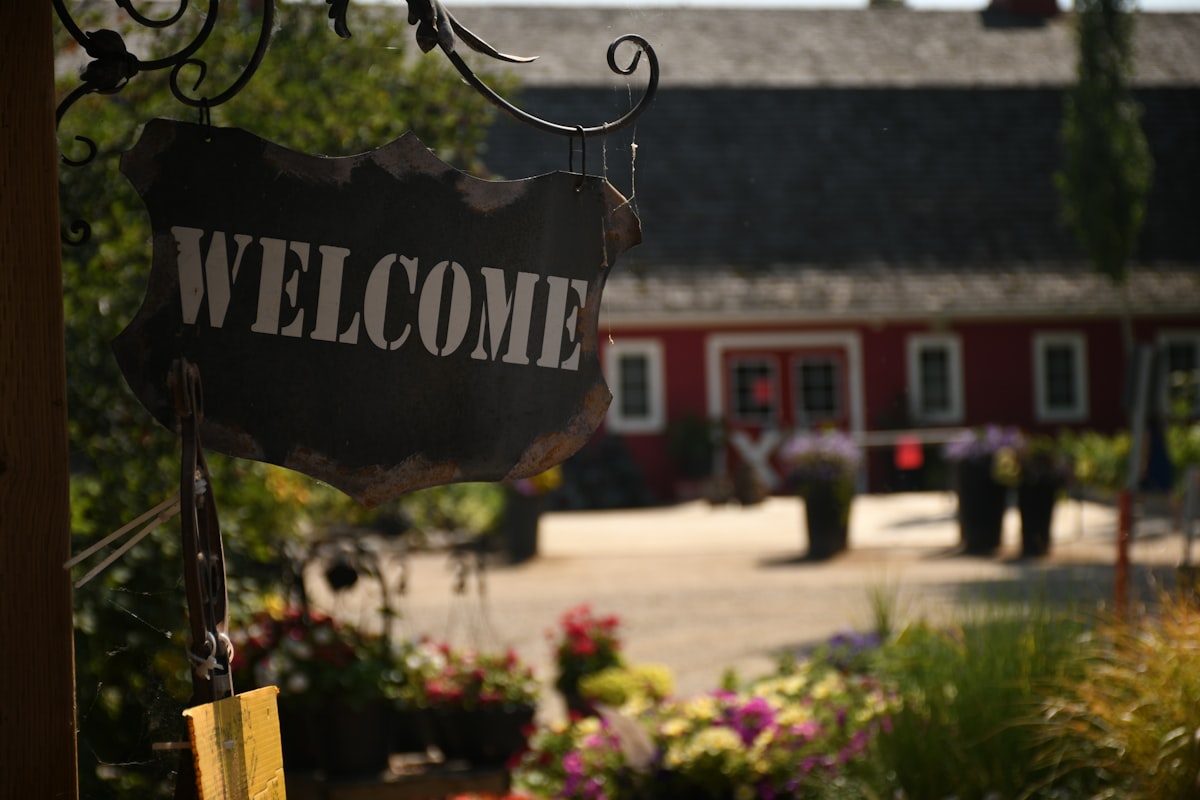
    Most conversion loss happens before guests taste a single wine. Friction points to eliminate: parking confusion (clear signage from road to designated visitor parking), entrance ambiguity (visible “Welcome” or “Entrance” signage), delayed greeting (staff acknowledges within 30 seconds), and physical burden (offer to take coat or bag immediately).

    Phase 2: Orientation (Minutes 3-5) — Anxiety Reduction

    Confusion about what happens next creates decision paralysis. Explain tasting options verbally rather than handing over an overwhelming menu. Confirm reservations or accommodate walk-ins. Proactively point out the restroom location. Set timeline expectations. Guests relax when they know what to expect and how long it takes.

    Phase 3: Tasting Experience (Minutes 6-45) — Core Value Delivery

    Read guest energy and match pacing accordingly. Encourage questions: “What questions do you have?” beats “Here are the tasting notes.” Weave winemaking philosophy naturally into conversation rather than scripted presentations. Notice what guests gravitate toward and personalize recommendations.

    Phase 4: Purchase Transition (Minutes 46-50) — Natural Close

    Summarize preferences authentically: “You especially enjoyed the Cabernet and the Syrah.” Present relevant options based on stated interests. Introduce subscription only if they have expressed interest in multiple wines. Give permission to say no: “Many guests like to think about it and order online later.” Permission reduces resistance to yes.

    Phase 5: Departure (Minutes 51-60) — Lasting Impression

    Process payment efficiently. Package wines professionally for transport. Explain next steps clearly. Walk guests to the door, make eye contact, and use their name. The quality of the farewell creates word-of-mouth or silence.

    The Results From Journey Mapping

    • Tasting-to-purchase conversion rose meaningfully from the same visitor volume.
    • “Felt rushed” complaints dropped sharply (pacing optimization).
    • “Confused about options” feedback dropped sharply (orientation clarity).
    • Average visit satisfaction (NPS) improved noticeably.
    • Membership retention year-over-year improved.
    • Annual revenue increased meaningfully from the same visitor volume.
    • Implementation cost: $0 (process redesign using existing resources).

    Implementation Process

    Week 1: Manager observes 10 guest experiences without intervening, documenting actual timing and noting friction points. Week 2: Address the top 5 friction points identified (typically parking signage, greeting speed, option clarity, pacing, and farewell personalization). Cost: $0-300. Week 3: Train staff on the optimized journey sequence and role-play transitions. Week 4: Track conversion rate change and adjust based on guest response.

    Have you mapped your tasting experience minute by minute to identify where friction is destroying conversions? Download our complete visitor journey mapping template.

    P.S. The journey phase with the highest conversion impact: Arrival (Minutes 0-2). A winery added “Tasting Room Parking” signage ($85), an entrance welcome sign ($120), and trained staff to greet within 30 seconds (no cost). Conversion rose from arrival optimization alone. First impressions in 90 seconds determine whether guests relax into the experience or remain anxious throughout. Anxiety does not convert.

  • The Scent, Sound, Light Combination That Justifies Premium Pricing

    The Scent, Sound, Light Combination That Justifies Premium Pricing

    Sensory coherence — the deliberate alignment of ambient scent, background music tempo, and lighting warmth — measurably increases tasting room dwell time, perceived wine quality, and willingness to pay premium prices. Research in retail sensory environments shows that slow-tempo music, warm low lighting, and subtle barrel- or terroir-adjacent scents individually increase purchase values, but the combination creates a reinforcing effect. For boutique wineries, this means a $200–$500 investment in sensory design can justify price points 20–30% higher than competitors with identical wine quality.

    A winery spent $180,000 on beautiful tasting room renovations: gorgeous stone counters, professional lighting, modern furniture. Three months later, conversion rates remained flat.

    The problem was not the investment. It was the sensory incoherence nobody discussed during design. Harsh 5000K LED lighting made the space feel clinical. The playlist featured modern pop with distracting lyrics during tastings. The air conditioning was set to 66 degrees, leaving guests uncomfortable. Cheap glassware felt flimsy despite premium wine pricing. Every element worked against the premium positioning the wine quality deserved.

    The Sensory Coherence Framework

    High-performing Hospitality Virtuoso operations architect sensory experience systematically across four channels.

    1. Scent Design (Olfactory Anchoring)

    Your entrance sets the tone. Guests form impressions within 7 seconds of entry. Subtle oak or leather notes through essential oil diffusers ($89-240 investment) at the entrance. Clean, neutral air quality in the tasting area. Natural wood aromatics from actual barrels in the barrel room — guests detect artificial scents immediately. Monthly cost of essential oils: $35. Annual investment: approximately $600 after initial diffuser purchase.

    2. Sound Design (Auditory Atmosphere)

    Volume matters more than genre. Target 60-65 decibels of background music — guests hear it but easily talk over it. Jazz, classical, or acoustic instrumental matched to wine positioning. No lyrics during tastings; vocals compete for mental processing bandwidth with wine evaluation. Sound-dampening panels ($800-2,400) in echo-prone high-ceiling spaces. Implementation: curated Spotify playlists (free), basic sound system upgrade ($600-1,800) if needed.

    3. Visual Design (Optical Framing)

    Lighting temperature changes everything. Warm 2700-3000K color temperature creates an inviting atmosphere versus the clinical feel of 4000-5000K. Clear sightlines to vineyard, barrel room, or production areas build authenticity. Earth tones that complement wine. Spotless glassware, counter surfaces, and restrooms — non-negotiable. Replace cool LED bulbs with warm alternatives ($200-600).

    4. Tactile Design (Haptic Experience)

    Guests hold glassware for 30-90 minutes. Quality matters. Proper weight and balance ($12-18 for a quality Riedel or Zalto glass). Comfortable furniture with back support. Temperature of 68-72 degrees Fahrenheit year-round. Natural wood, stone, or leather surfaces over plastic or laminate.

    The Results From Sensory Coherence

    • Tasting-to-purchase conversion rose to a meaningfully higher level than the baseline.
    • Average visit duration increased (guests lingering rather than rushing).
    • “Loved the atmosphere” review mentions rose sharply.
    • Return visit intention surveys improved.
    • Annual revenue increased meaningfully.
    • Implementation cost: $8,500.

    Why This Works Psychologically

    Sensory coherence creates subconscious trust. Misaligned elements trigger skepticism. When all four channels align, guests relax into the experience. Their subconscious registers: “This place takes quality seriously in every detail.” That trust transfers to wine evaluation and purchase decisions.

    Implementation Priority

    Start with the highest-impact, lowest-cost improvements. Week 1: lighting audit and bulb replacement ($200-600). Week 2: sound system and playlist curation ($0-1,800). Week 3: scent design implementation ($600 first-year cost). Week 4: glassware upgrade evaluation ($1,200-1,800 for 100 quality stems). Total first-month investment: $2,000-4,800 for dramatic sensory improvement.

    How intentional is your current sensory design? Read and learn more about the four winery archetypes, specifically on the hospitality-driven archetype.

    P.S. The sensory element with the highest immediate impact: lighting temperature replacement from cool 4000-5000K to warm 2700-3000K. Cost: $200-600 for bulb replacement. Guest feedback: “Did you renovate? It feels completely different.” Conversion impact: a meaningful lift from this single change.

  • Your Cart Abandonment Rate Is Far Too High (And You Probably Do Not Know It)

    Your Cart Abandonment Rate Is Far Too High (And You Probably Do Not Know It)

    The average winery e-commerce cart abandonment rate is 58%, meaning more than half of all online orders are started and never completed — a recoverable revenue loss most wineries never measure. Digital optimization targeting this gap — abandoned-cart email sequences, simplified checkout, mobile-optimized pages, and trust signals at checkout — can recover a significant share of that lost revenue. One winery case in this post documents $241K in additional annual revenue generated by fixing these four digital friction points without increasing ad spend or traffic.

    Two digital-focused wineries. Both investing $6,000 monthly in digital marketing. Both generating decent traffic to their websites. One generated substantially more in annual revenue than the other.

    The difference was not larger budgets or better wine. It was systematic digital optimization that the lower-performing winery refused to implement.

    The Digital Presence Illusion

    The lower-performing winery had everything that appeared to be digital sophistication: a beautiful website, active social media across Instagram, Facebook, and LinkedIn, consistent email marketing, and paid advertising on Google and social platforms.

    They were measuring poorly. Using last-click attribution, which gave Google Ads credit for sales that Instagram and email actually created. Tracking overall conversion rates while missing that checkout completion was alarmingly low. Reviewing 47 different metrics every week, which created analysis paralysis instead of action.

    The Uncomfortable Attribution Reality

    Instagram was driving much of the initial discovery and consideration while receiving only a small slice of the marketing budget. Google Ads accounted for the largest share of the budget but influenced only a minority of actual purchase decisions.

    The financial impact: significant annual wasted spend that could be reallocated for a meaningful revenue gain by shifting the budget toward channels actually driving discovery and engagement.

    The Checkout Completion Catastrophe

    Their checkout process had a low completion rate. A large share of the people who started the checkout process abandoned before completing their purchase. This was substantial annual revenue walking away because the checkout flow asked unnecessary questions and lacked one-click payment options. The cost to fix: about $500.

    The Analysis Paralysis Dashboard

    Their analytics dashboard tracked 47 different metrics. When cart abandonment spiked, they discovered it 3 weeks later during the weekly review meeting. A seven-metric dashboard with action triggers cut issue detection from 3-week delays to 24-hour awareness and improved decision speed dramatically.

    The Combined Systematic Optimization Impact

    1. Multi-touch attribution revealing Instagram is driving most of the discovery on a small share of budget: reallocated wasted spend for a meaningful revenue gain.
    2. Funnel optimization revealing low checkout completion (biggest leak): fixed for $500, generating a substantial annual revenue increase.
    3. Seven-metric dashboard reducing analysis 8hr → 20min weekly, enabling dramatically faster response: a meaningful impact from faster issue detection and correction.

    Combined result: substantial additional annual revenue from systematic digital optimization of what they already had.

    Discover Your Growth Archetype

    Different wineries succeed through different systematic approaches aligned with their operational DNA. Some optimize through digital sophistication (Prestige Trailblazer). Others excel through exceptional on-premise experiences (Hospitality Virtuoso). Some build deep community relationships (Loyalty Sommelier). Others balance heritage with strategic innovation (Legacy Innovator).

    Take this 3-minute Winery Sales Growth Archetype assessment to identify your natural competitive advantages and receive a customized optimization strategy aligned with how your winery already operates.

    Your digital presence is already built. Your optimization systems determine whether that presence generates substantially more or substantially less than competitors with similar traffic. Make it systematic.

  • Why Data-Obsessed Wineries Lose to Focused Competitors

    Why Data-Obsessed Wineries Lose to Focused Competitors

    Wineries that track dozens of metrics often make slower, worse decisions than competitors who focus on seven core KPIs, because more data without a decision framework creates paralysis, not clarity. The seven metrics that matter for boutique DTC wineries are: wine club retention rate, revenue per visitor, email list growth, average order value, tasting room conversion rate, member lifetime value, and referral rate. Tracking only these seven eliminates noise, accelerates decisions, and aligns the entire team around the numbers that directly drive revenue.

    Measuring everything means acting on nothing. Focused metrics enable decisions.

    There is a pattern in digitally sophisticated wineries: the ones outperforming their data-obsessed competitors are not tracking more metrics. They are tracking fewer, but with ruthless focus and clear action triggers.

    The Data Overload Shadow

    A comprehensive dashboard likely includes 30-50 metrics: traffic sources, conversion funnels, email performance, customer segments, AOV trends, LTV calculations, engagement rates, and more. Here is what comprehensive dashboards actually produce: analysis paralysis (8 hours weekly reviewing metrics without clear action plans), delayed response (issues detected 3 weeks after they begin), decision fatigue, and false confidence.

    The Seven-Metric Framework

    High-performing operations focus on seven critical metrics with weekly review and action triggers.

    1. Traffic by Source (7-Day Rolling). Action trigger: 20%+ change in any single source. Purpose: Detect channel degradation within days, not weeks.
    2. Overall Conversion Rate (30-Day). Action trigger: Drop below 4.0% baseline. Purpose: Catch funnel degradation early.
    3. Average Order Value (30-Day). Action trigger: $15+ gap from $200 target. Purpose: Prompt bundling and upsell optimization.
    4. Email Performance (Per-Send). Action trigger: Revenue below $2,000 per send. Purpose: Improve segmentation and content.
    5. Customer Acquisition Cost (Monthly). Action trigger: Above $150 per customer. Purpose: Maintain profitability threshold.
    6. Customer Lifetime Value (90-Day Cohort). Action trigger: Below $400 for new cohorts. Purpose: Ensure long-term sustainability.
    7. Active Subscriber Engagement (30-Day Segments). Action trigger: Active segment below 45% of list. Purpose: Trigger re-engagement campaign.

    What This Framework Actually Produces

    A data-focused winery implementing this seven-metric dashboard saw:

    • Analysis time: 8 hours/week to 20 minutes/week.
    • Issue detection speed: 3 weeks to 3 days (dramatically faster).
    • Action execution improved sharply (clear triggers eliminate paralysis).
    • Revenue impact: a meaningful annual gain (faster response to problems).
    • Decision confidence rose (metrics clarify priorities).

    Implementation cost: $0-49/month. Time saved: 390 hours annually.

    Why Focused Metrics Beat Comprehensive Dashboards

    Three principles make focused frameworks superior. First, decision clarity over data completeness: seven metrics with clear triggers force decisions; forty-seven metrics without triggers enable avoidance. Second, action triggers eliminate paralysis: knowing when to act matters more than knowing everything. Third, weekly cadence creates momentum: twenty-minute weekly reviews maintain focus without creating fatigue.

    The Implementation Priority

    Start with this 4-week implementation: Week 1, identify your current baseline for these seven metrics. Week 2, set appropriate action triggers based on your performance. Week 3, implement a 20-minute weekly review calendar block. Week 4, document and execute on the first action trigger.

    How many metrics do you currently review weekly: 7 or 47? If you cannot give a precise number, that is the first problem to solve. Learn more about the Prestige Trailblazer dashboard framework.

  • Substantial Conversion Improvement From Same Traffic Volume

    Substantial Conversion Improvement From Same Traffic Volume

    A 67% improvement in conversion from identical traffic volume is achievable when a winery systematically audits and repairs its funnel leak points rather than spending more on acquisition. Funnel leaks in DTC winery contexts typically occur at three stages: tasting room opt-in, post-visit email follow-up, and cart abandonment during online orders. Fixing friction at each stage — clearer calls to action, timely follow-up sequences, simplified checkout — compounds into a significant revenue lift without increasing visitor count or ad spend.

    Traffic volume is a vanity metric. Conversion efficiency pays the bills.

    Implementing systematic funnel analysis for digitally sophisticated wineries changes how you think about optimization. Most wineries pour money into driving more visitors — more ad spend, better SEO, expanded social reach. More traffic feels productive. But if your funnel leaks, you are filling a bucket with holes.

    The Conversion Efficiency Revolution

    Prestige Trailblazer operations measure conversion at every funnel stage and systematically repair leaks.

    1. Awareness to Interest (Landing Page). Metric: Bounce rate and time-on-page. Benchmark: below 45% bounce, above 2 minutes time. Optimization: Headline clarity, visual appeal, immediate value proposition.
    2. Interest to Consideration (Product Pages). Metric: Add-to-cart rate. Benchmark: above 15% of product page visitors. Optimization: Product descriptions, reviews, scarcity signals, imagery.
    3. Consideration to Intent (Cart). Metric: Checkout initiation rate. Benchmark: above 75% of cart additions. Optimization: Cart abandonment triggers, free shipping threshold, trust signals.
    4. Intent to Purchase (Checkout). Metric: Checkout completion rate. Benchmark: above 85% of checkout initiations. Optimization: Form simplification, payment options, error prevention.

    The Results That Matter

    A data-focused winery implementing funnel analysis:

    • Checkout completion rose substantially.
    • Overall conversion improved meaningfully.
    • Revenue per visitor climbed notably.
    • Primary problem: Stage 4 checkout, not traffic quality.
    • A meaningful annual revenue increase from identical traffic volume.

    Implementation cost: $0-500 (analytics setup and minor site modifications). Revenue impact: a meaningful annual gain. ROI: an outsized return on a modest investment.

    The Compounding Effect

    Every funnel stage loses customers. Systematic leak repair compounds improvements. Stage 1 improvement increases Stage 2 volume. Stage 2 improvement increases Stage 3 volume. Each repair multiplies the impact of previous fixes.

    Traffic acquisition treats symptoms. Conversion optimization fixes the disease.

    For digital-sophisticated wineries, stage-by-stage measurement reveals where revenue actually hides. Your funnel currently has identifiable leaks. The question is whether you are measuring them. Learn more about digitally sophisticated funnel optimization.

  • Customers Rarely Buy on First Exposure (Your Tracking Should Know This)

    Customers Rarely Buy on First Exposure (Your Tracking Should Know This)

    Most winery purchases require 5–8 brand touchpoints before a visitor converts, yet most wineries attribute the sale entirely to the last click. Multi-touch attribution tracks every interaction — social ad, email, tasting room visit, referral — and assigns partial credit to each. For DTC wineries, this means discovering that Instagram drives awareness while a follow-up email sequence closes the club signup, not the ad alone. Without this view, marketing budget flows toward the wrong channels, and the early-funnel work that actually earns loyalty goes unfunded.

    Your attribution model is probably lying to you.

    One measurement blindspot that consistently costs digital-sophisticated winery operations real money every year: single-touch attribution.

    Most wineries give 100% credit to the last click before purchase. Google Ad? It gets the glory. The Instagram post that created initial interest? Zero credit. The email that educated them? Ignored. The website visit where they read reviews? Does not count.

    This measurement approach does not just misrepresent reality; it actively sabotages your budget decisions.

    The Attribution Blindspot

    Single-touch attribution (usually last-click) creates a distorted picture: Google Ad gets 100% credit for the sale; Instagram discovery post gets 0%; the email nurture sequence gets 0%; website visits and review reading get 0%.

    Result? You over-invest in last-click channels and under-invest in the awareness and education work that actually created the customer interest.

    Position-Based Multi-Touch Attribution

    Data-driven wineries use a framework that reveals the complete customer journey.

    1. First-touch: 20% credit. The Instagram post where they first discovered you matters.
    2. Mid-touches: 20% distributed. Email opens, website visits, and review reading each get weighted.
    3. Last-touch: 40% credit. The Google Ad that closed the sale gets the largest share, but not 100%.
    4. Time decay: 20% bonus. Recent interactions matter more than old ones.

    Implementation

    You need three things: UTM tracking on every link you share; a CRM that records the full customer journey; and an attribution model that calculates contribution per channel (built into most modern analytics platforms). Monthly analysis reveals true channel ROI.

    Real Impact From Multi-Touch Attribution

    • Ad spend waste identified (over-investment in last-click channels exposed).
    • Budget reallocation impact: a meaningful revenue gain (moving money to high-performing awareness work).
    • Attribution accuracy improves markedly compared to single-touch models.
    • Email marketing value discovered: roughly 50–100% undervalued in the last-click model.
    • Instagram ROI revealed: driving a large share of first touchpoints while receiving only a small slice of the budget.

    Implementation cost: $0-$99/month. Revenue impact: a meaningful annual gain (optimized allocation). ROI: an outsized return on a modest monthly cost.

    Why This Matters

    Customers rarely buy on first exposure. Multi-touch attribution acknowledges this reality. For digital-sophisticated wineries, attribution accuracy determines whether you are investing in what works or in what you assume works.

    Single-touch tells you where they clicked. Multi-touch tells you why they bought. Are you measuring only the last click, or the full customer journey? Explore digital-sophisticated winery strategies for Prestige Trailblazers.

    P.S. If you are currently using last-click attribution, you are not making bad decisions. You are making decisions based on incomplete information. Multi-touch reveals what is actually driving results. The difference is significant.

  • Cart abandonment: lost forever, or recovered automatically like we did?

    Cart abandonment: lost forever, or recovered automatically like we did?

    Without an automated cart recovery sequence, 73% of wine e-commerce abandonment is permanent revenue loss; with a properly timed automated sequence, up to 48% of those carts can be recovered. The difference is entirely operational: wineries without automation accept the 73% loss as inevitable, while those with a three-step email or SMS sequence running in the background recover nearly half of that revenue without additional ad spend or staff time. The recovery sequence pays for itself within weeks of activation on any list with a few hundred active buyers or above.

    Two digital wineries. Same website traffic. Similar member base. Identical potential.

    A winery owner who manually manages every email campaign, personally reviews every abandoned cart, and constantly feels behind.

    Other wineries that deploy intelligent automation systems operate 24/7 without requiring constant attention.

    The revenue difference? A substantial sum annually.

    That’s not a typo. That’s the gap between working harder and building systems that work smarter.

    What Changed When We Deployed Automation + AI

    The 7-Email Abandoned Cart Sequence

    Meaningful monthly revenue recovery while sleeping. Average abandoned cart value: $213. Recovery rate jumped from 6% to 48%. That’s not about badgering people—it’s about behavioral triggers responding to customer actions at optimal timing windows.

    AI-Powered Personalization

    A sharp email revenue increase without writing new content. We used to send one subject line to everyone—now AI tests 15-20 variations and automatically sends the highest-performing version to each subscriber. We used to pick one send time—now each subscriber gets emails at their personal optimal engagement window. We used to recommend the same wines to everyone—now AI analyzes purchase history and preferences to suggest products each member actually wants.

    ML Customer Segmentation

    From a handful of demographic groups to dozens of behavioral micro-segments. ML-discovered segments show substantially higher engagement than manual demographic grouping. That’s the difference between guessing at customer behavior and predicting it.

    Behavioral Triggers

    Strong ROI within 90 days. Systems respond to what customers do, not what the calendar says. Browse behavior triggers product recommendations. Cart abandonment triggers recovery sequences. Purchase patterns trigger replenishment reminders.

    What This Actually Meant For Our Operation

    Email revenue increased sharply without the marketing team writing new content or working longer hours. Customer segmentation went from a handful of broad groups to dozens of behavioral patterns we can actually predict and respond to. Cart abandonment recovery jumped from 6% to 48%.

    Your Natural Growth Advantages Are Already There

    Every winery has natural operational strengths. Prestige Trailblazers excel at digital sophistication and data-driven marketing—but that’s just one of four distinct growth archetypes.

    Hospitality Virtuosos dominate through exceptional on-premise experiences. Loyalty Sommeliers build deep community relationships that generate exceptional retention. Legacy Innovators balance heritage with strategic evolution to command premium pricing.

    Which archetype matches your winery’s natural strengths?

    The wineries that deployed intelligent systems three years ago now generate substantial additional annual revenue from customer data they already had. Which winery will you be?

  • Same Heritage, Worlds Apart in Revenue (The Difference)

    Same Heritage, Worlds Apart in Revenue (The Difference)

    Two wineries with comparable heritage, acreage, and varietals can produce a $77,000 annual revenue gap—and the difference is almost never the wine; it’s how the heritage is communicated to members and visitors. The winery generating more revenue typically connects its founding story directly to a specific, verifiable constraint—a single hillside block, a particular clone, a family decision made in a specific year—while the lower-revenue winery offers a generic “family-owned since” narrative. Specificity in origin storytelling commands a premium price and reduces members’ price sensitivity.

    Two wineries. Both with rich histories spanning generations. Both in premium wine regions. Both produce exceptional wines from family-owned estates.

    One commands meaningful premiums while still growing volume. The other loses meaningful revenue annually per 100 club members through silent attrition while focusing on production.

    Same heritage. Opposite outcomes.

    The difference isn’t their history—it’s how they communicate it.

    The Heritage Trap Most Wineries Fall Into

    When heritage becomes a background story rather than a strategic asset, tradition morphs from a competitive advantage into a business liability. Your 150-year legacy starts working against you rather than for you.

    Most heritage wineries treat their history as marketing decoration. Family stories populate website copy. Historical photos hang in tasting rooms. Generational timelines appear on tours. But that history never transforms into revenue.

    What Legacy Innovators Do Differently

    They don’t abandon tradition—they execute strategic evolution through proven frameworks:

    • Succession Planning as Marketing Asset: Generational transitions become value-acceleration opportunities. Result: 2.4x valuation increase during leadership changes most wineries fear.
    • The 80/20 Heritage Preservation Rule: Maintain 80% of traditional elements while evolving 20% for contemporary relevance. Outcome: strong base retention while capturing new demographics simultaneously.
    • Multi-Generational Experience Architecture: Design touchpoints that honor legacy while speaking to modern wine lovers. Impact: meaningful revenue growth from expanded market reach without alienating core customers.
    • Modern Methods Serving Traditional Values: Technology and data amplify heritage rather than replace it. Your story reaches further, resonates deeper, converts stronger.

    Combined transformation: meaningful price premiums alongside volume growth, happening at the same time.

    The Question You’ve Been Avoiding

    Is your winery’s history becoming a liability instead of an asset?

    Every 100 wine club members you ignore costs you meaningful revenue annually through silent attrition. Members who once celebrated your tradition now quietly disappear because your heritage communication hasn’t evolved.

    The assessment reveals your specific archetype: Prestige Trailblazer, Hospitality Virtuoso, Loyalty Sommelier, or Legacy Innovator. Each comes with proven frameworks for transforming heritage into revenue tailored to your operational DNA.

    Your heritage is either your defense or your destroyer. Three minutes tells you which.

  • The unconscious pattern costing you a meaningful share of wine club revenue annually

    The unconscious pattern costing you a meaningful share of wine club revenue annually

    Most boutique wineries lose roughly 17% of annual wine club revenue not through visible churn but through a set of unconscious engagement patterns—defaulting to acquisition marketing while neglecting the members already paying. These patterns include: treating all members identically regardless of tenure or spend, sending shipment emails only when billing is due, and measuring club health by headcount rather than engagement score. The revenue loss is invisible on a monthly basis but compounds into a significant gap over 12 months.

    Picture two wineries in your region. Both produce exceptional wine. Both have dedicated followings. Both work tirelessly to deliver quality.

    One holds members at industry-standard retention—respectable by typical benchmarks.

    The other? Retention in the mid-to-high 70s. Selling out at full price. Often with waiting lists.

    The difference isn’t wine quality. It’s strategic relationship architecture.

    The Loyalty Sommelier Advantage

    While most wineries focus exclusively on acquisition or rely on periodic events, Loyalty Sommelier producers understand something critical: relationships require strategic intervention at specific moments.

    The 90-Day Vulnerability Window

    New members face their highest churn risk in the early months after signup. Most wineries don’t track this. Loyalty Sommeliers intervene with three calculated touchpoints:

    • Day 47: Surprise and delight with a physical gift (not wine).
    • Day 75: Personal connection referencing their signup story.
    • Day 90: Exclusivity reinforcement creating FOMO.

    Result: a sharp reduction in new member cancellations.

    Active Online Communities

    Between in-person visits (typically 1-2x per year), your members spend 363 days without direct engagement. Private online communities fill this gap, creating 4-7x weekly touchpoints where members engage with each other—not just your brand.

    The impact: a notable retention improvement compared to event-only strategies.

    Emotion-Triggered Referral Asks

    Asking for referrals at random moments yields mediocre results. Loyalty Sommeliers ask immediately after peak experiences—right when emotional connection peaks.

    The difference: more effective than generic referral requests.

    Member Lifecycle Management

    Understanding where each member sits in their journey enables predictive retention. You’re not reacting to cancellations—you’re preventing them by recognizing patterns before members consciously decide to leave.

    The Combined Result

    When you align engagement with natural operational strengths rather than forcing generic “best practices”:

    • Response rates increased 91%.
    • Limited releases consistently sold out without discounting.
    • Average order value jumped 62% (from $136 to $213).
    • Annual member value increased 29%.
    • Marketing expenses reduced 32%.

    Which Archetype Matches Your Natural Strengths?

    Not every winery operates like a Loyalty Sommelier. Some excel through digital sophistication (Prestige Trailblazer). Others through exceptional on-premise experiences (Hospitality Virtuoso). Still others by balancing heritage with innovation (Legacy Innovator).

    Your archetype determines which strategies will generate that significant opportunity per 1,000 members—and which will drain resources fighting against your operational DNA.

    Discover your Winery Sales Growth Archetype in 3 minutes.